Shopping centre refurbishments: the Rescaldina case and impacts for local owners
by Marco Balistreri · · 5 minute read
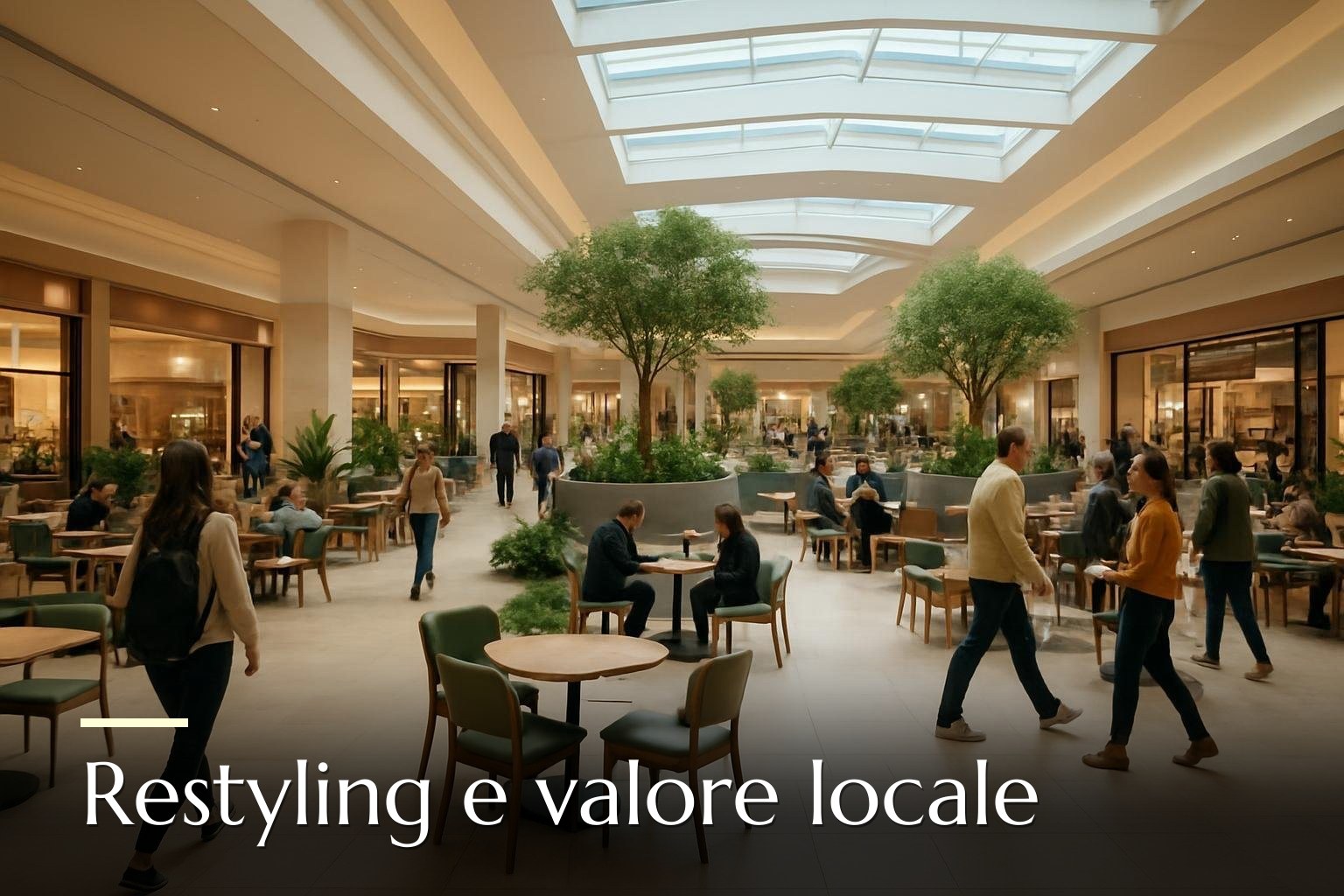
In Rescaldina a €20 million restyling transformed 11,000 square metres of the first floor of a shopping centre and led to the opening of 25 new shops. This example concretely illustrates what we mean by restyling of shopping centres: not just aesthetic interventions, but a revision of the commercial mix, services and the social function of the facility, with direct effects on the local property market. In this article, we explain how these changes impact property values, commercial rents and neighbourhood dynamics useful to owners and investors in Turin and nearby areas.
In brief
- Exemplary project: Rescaldina, around €20 million invested and 11,000 m² renewed, opening 25 new retail units.
- Traffic effects: the project forecasts a 30% increase in visitors (from 6 to 7.7 million) and an expected 20% rise in turnover.
- Impact on the property market: possible revaluation of retail units and increase in rents in surrounding areas.
- Strategy: retail + services mix (food court, leisure, coworking, fitness) is key to attract visitors and improve asset profitability.
What changes for the value of properties near renewed centres
When a shopping centre is redeveloped, the first measurable effect is an increase in footfall: more visitors mean greater demand for services and, consequently, increased interest in residential and commercial properties nearby. In Turin and its surrounding hinterland, a regenerated centre introducing social spaces (internal squares, food court, leisure areas) tends to make shops within a few minutes’ drive or tram ride more appealing, raising retail property values and the likelihood of more stable leases with better rents.
How commercial rent levels change
Most rent increases derive from three factors: higher pedestrian traffic, better quality tenant mix and services that extend visitor dwell time. For owners of vacant premises near a redeveloped centre, this can translate into higher rental offers and contracts with more favourable conditions (longer terms, fewer turnover clauses). However, rents needed to cover tenant refurbishment costs or technological upgrades may require initial investments from tenants too, implying a market adjustment phase.
Effects on property sales and buyers
Residential buyers and investors look at two aspects: quality of services and demand stability. A shopping centre offering coworking, gyms, events and a generous food court makes the area more attractive for home seekers in well-served locations and for investors targeting long-term rentals. Conversely, if restyling shifts the area towards a more commercial or tourist offer, some residential buyer segments may find it less favourable (noise, traffic). Thus, balancing potential capital gain with changes to liveability is important.
Risks and aspects for local owners to consider
- Dependence on centre’s success: not all redevelopments meet traffic targets; property revaluation may be delayed or partial.
- Upgrade costs: attracting new tenants may require investment in systems, shop windows or regulatory compliance (e.g. accessibility, fire safety).
- Competition and commercial mix: arrival of large chains can shift demand away from small shops; owners must assess risk to niche tenants.
- Planning and contractual timing: permits, cadastral updates and negotiating new contracts take time and patience.
Practical opportunities for those owning properties in Turin and surrounding areas
Owners can leverage regeneration momentum with concrete actions: update spaces to be more flexible (open plan, modular shop fronts), consider medium-long term contracts with service operators (coworking, gyms, horeca) and monitor traffic and demographic data provided by the centre. In Turin, where the combination of cultural events and public infrastructure greatly influences flows, integrating services complementary to the urban network can increase investment resilience.
To explore how to counteract the loss of retail activities in urban fabric and how delayed redevelopment affects values, read our articles How to combat commercial desertification in Turin's neighbourhoods e The Cost of Delaying Redevelopment.
Practical advice for owners
- Monitor the timings and leasing plans of the centre: anticipating the arrival of new tenants helps position your property's offer.
- Consider targeted rather than generic interventions: restoring functionality (accessibility, systems) is often more profitable than mere aesthetics.
- Negotiate contractual flexibility: increasing rents linked to turnover targets or minimum duration can attract serious operators.
- Consider mitigation measures for residential use: soundproofing and parking management preserve residential property value.
Frequently asked questions
Does a restyling always increase the value of nearby properties?
Not always: an increase is likely when the project improves attractiveness and service quality, but it depends on execution, tenant mix, and the ability to generate stable traffic. Case-by-case assessments are necessary.
How long does it take to see effects on rental prices?
Changes can appear within 12-36 months: flows and occupancy come first, followed by rent adjustments. Some long-term effects depend on the perceived quality of the area.
Should I renovate my unit immediately after a centre restyling?
Not necessarily immediately, but it is useful to plan targeted interventions (shop windows, systems, accessibility). Targeted investments increase the chances of attracting good tenants.
What to look for in the lease contract in a regenerating area?
Check minimum duration, renewal clauses, rent reviews, responsibilities for structural adjustments, and clauses related to commercial performance (turnover, exclusivity, opening hours).
In conclusion, the Rescaldina case shows that a well-planned restyling can create new demand, jobs and profitability for local assets. For owners in Turin and its suburbs, the advice is to stay informed about centre plans, consider targeted interventions and negotiate contracts that balance risk and return. If you want a specific analysis of your property or advice on opportunities in your area, contact us: we can help you assess costs, timings and potential scenarios.
Do you have questions about this topic or your property?
Talk to us