Third building amnesty: proposals and implications for buyers and sellers
by Marco Balistreri · · 5 minute read
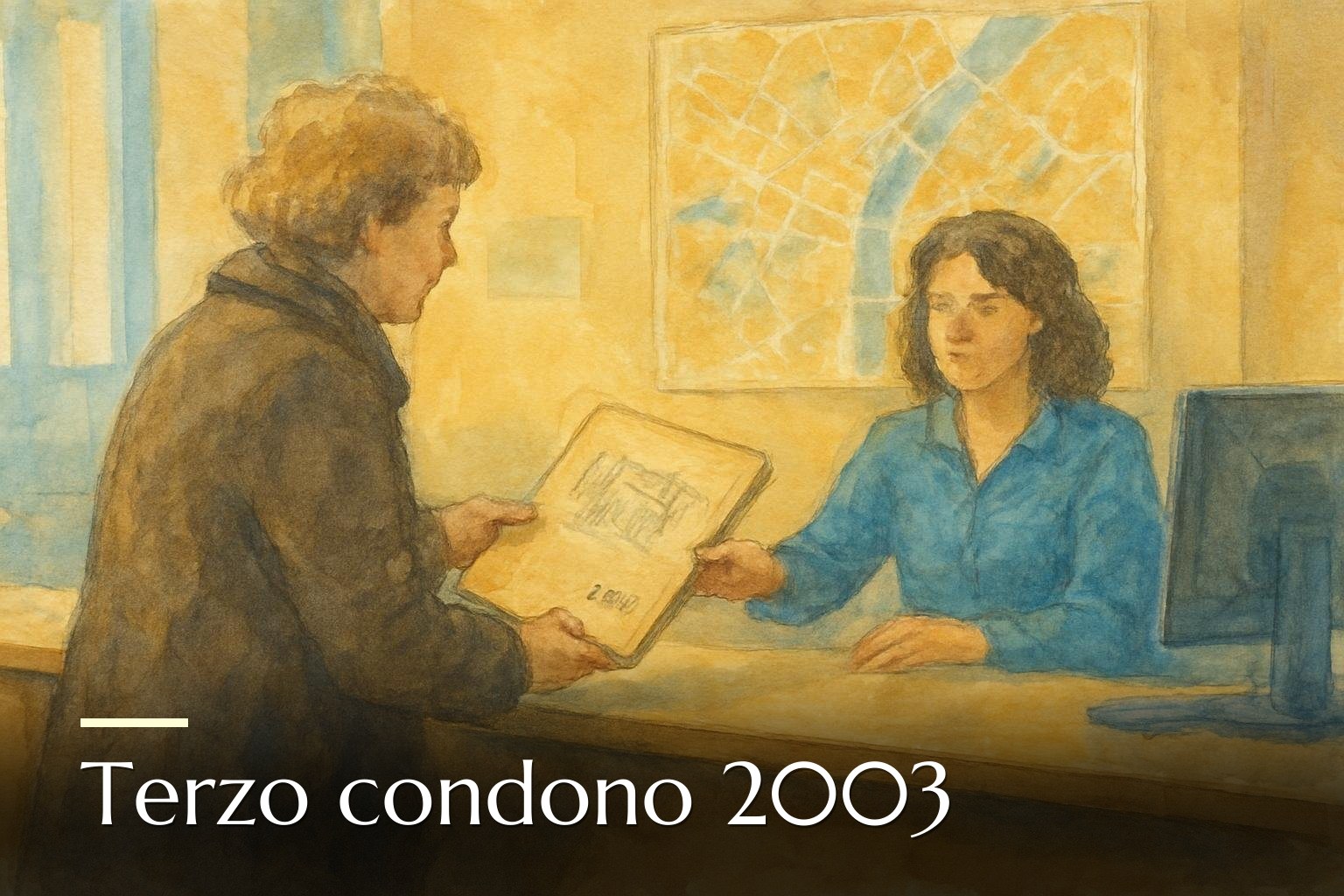
Recently the proposal to reopen the deadlines for the third building amnesty (from 2003) has re-emerged. For those buying or selling property in Italy — specifically Turin and surroundings — this prospect changes the risk landscape related to building irregularities and may create opportunities to regularise properties stuck in old procedures. This article explains which works could be included, which would remain excluded, and what checks to carry out before a sale.
In brief
- Subject: proposal to reopen applications for the third amnesty relating to 2003, not to extend the date for completion of works.
- Timeframe: the proposed measure aims to open a new window for applications on abuses completed by 31 March 2003.
- Limits: protected areas remain excluded (cultural heritage, public domain, civic uses, absolute building bans) and, in many cases, major abuses in protected zones.
- Practical impact: potential reduction of uncertainty for properties with pending applications but does not remove the obligation to verify planning and seismic compliance at the time of application.
What is being discussed: reopening of the third building amnesty
The proposal circulating in the 2027 Budget Law concerns reopening deadlines to submit applications related to the third national amnesty of 2003. It is important to underline that the deadline for work completion (still 31 March 2003) is not being changed; rather, a new time frame is offered to submit applications that were previously excluded. The stated goal is to free up pending cases and reduce administrative backlog.
Which violations could be regularised
If the measure reprises the scope of Article 32 of Legislative Decree 269/2003, the extraordinary regularisation could also cover substantial abuses made by 2003 — including extensions and new units built in breach of planning rules — upon payment of fees and charges. However, the true extent depends on the final text: not all types of work would be accepted, and many technical and territorial exclusions would remain in force.
Which exclusions and limits remain
Even in the most favourable scenarios, significant limits remain. In areas subject to landscape, environmental, hydrogeological or subsequent restrictions, case law has often ruled out amnesty for major abuses. Categories like public domain, cultural heritage, and areas of absolute non-building remain excluded by law. Furthermore, no regularisation is foreseen for works carried out after the firm deadline of 31 March 2003.
Implications for homebuyers
- Increased attention to historical documentation: for properties with building practices opened before 2003, reopening may facilitate regularisation; it remains essential to obtain the complete planning history (permits, demolition orders, suspended applications).
- Legal risk assessment: presence of significant abuse in a protected area remains a risk not easily regularisable; price and contractual guarantees must consider this uncertainty.
- Technical checks: even if extraordinary amnesty is possible, structural and seismic suitability requirements remain: it is advisable to request an updated technical report.
Implications for home sellers
For the seller reopening can turn a 'blocked' property into one sellable on better terms, but only if regularisation is genuinely feasible. It is worth evaluating the cost of fees, processing times of municipalities and the possibility of residual obligations (requirements from protection authorities). Transparency during negotiations reduces the risk of post-sale disputes.
How to evaluate a property with irregularities in Turin
In Turin, as in other cities, the first useful check is at the Municipality: inspections of building applications and status of records (orders, injunctions, building practices). For very old properties it may also be useful to consult historical land registry documents and request a compliance report by a qualified technician. If the property predates 1967 or has complex procedures, see also our guide on how to verify construction date before buying in Turin for practical steps and documents to request.
Timing and costs: what to consider
Although the Aprisse regulation is in place, actual timings will depend on the administrative capacity of the municipalities and regulatory clarifications. Costs include fines, concession charges, and technical expenses to update projects and reports (structural, sanitary). In some regions, the backlog of cases can extend response times.
Practical advice before buying or selling
- Request complete building documentation and an updated municipal certificate before signing the preliminary contract.
- Have a technician prepare a report assessing the hypothetical legalisation and seismic requirements.
- Include guarantee clauses and commitments regarding the status of the procedures or penalties in case of significant hidden defects in the preliminary contract.
- Consider a price agreement that accounts for regularisation costs and administrative timelines.
Frequently asked questions
Would the third building amnesty legalise abuses carried out after 2003?
No. The proposals under discussion only concern reopening the window for applications related to works completed by 31 March 2003; they do not extend the completion date of the works.
If I buy a property with abuses prior to 2003, can I count on the amnesty?
Not automatically. The possibility depends on the final text of the law and territorial exclusions (restrictions). It is necessary to check with a technician and obtain municipal certificates: the proposal could make regularisation feasible in cases previously blocked.
Can restricted areas be regularised with the 2003 amnesty?
In many cases, no: current legislation and case law exclude amnesty for major abuses in areas with landscape restrictions, cultural assets or absolute building bans; only minor interventions may be allowed subject to the opinion of the protection authority.
How long will it take to regularise a property if the regulation passes?
Times vary: the procedure involves submitting the application, municipal verification and payment of charges; however, municipalities with large backlogs could take months or years to process cases. It is wise to consider long timings and plan accordingly.
In summary: the possible reopening of the third building amnesty changes the scenario for many properties with pending procedures, but does not automatically remove all restrictions and risks. Before buying or selling, it is advisable to obtain all documentation, a technical report and agree on adequate guarantees in the contract. If you wish, we can verify the status of your property's case and suggest the technical documents to request: contact us for a non-binding technical and commercial opinion.
Do you have questions about this topic or your property?
Talk to us