Glass photovoltaic railings: aesthetics and performance for prestigious penthouses
by Marco Balistreri · · 5 minute read
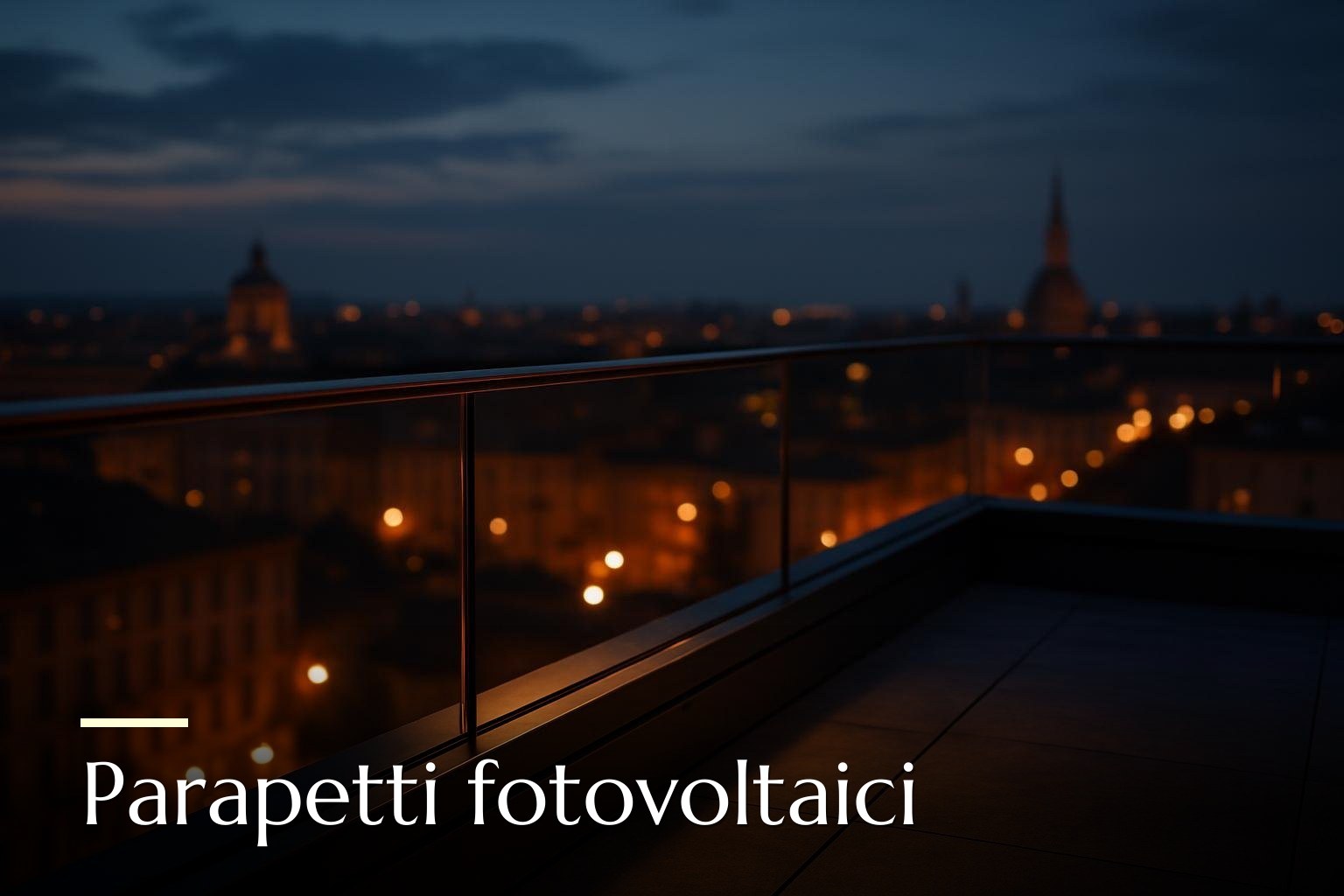
Glass photovoltaic balustrades are emerging as a premium solution for penthouses and high-end apartments: they integrate photovoltaic modules into the same safety panel of the balustrade, maintaining transparency, safety, and an elegant appearance. In Turin and cities with quality residential markets, this technology can increase the perceived value of the property and contribute to common area or private energy consumption.
In brief
- Glass photovoltaic balustrades combine safety functions with electricity production, maintaining partial transparency (typically 10–30% depending on the technology).
- They can be installed as integrated elements during the design phase or as replacements for existing balustrades in renovations with regulatory compliance.
- Benefits: aesthetic and commercial enhancement of the property, improved energy efficiency, solar shading, and increased privacy.
- Considerations: higher initial costs, need for concealed wiring and specific maintenance; assess connection to condominium system or individual use.
Parapetti fotovoltaici in vetro: cos'è e come funziona
Glass photovoltaic balustrades are laminated safety glass that incorporates an active photovoltaic layer: instead of classic transparent glass, an “active” glass generating electricity when exposed to light is used. Technologies vary (thin film, partly transparent cells, etc.); some offer a uniform appearance similar to tinted glass, others show visible cell patterns. The layering meets safety requirements for balustrades and balconies, while the outer surface can receive self-cleaning treatments.
Why it is beneficial for owners of penthouses or prestigious properties
In Turin, high-end penthouses and homes often focus on aesthetics and comfort: photovoltaic balustrades add a distinctive element that can translate into a commercial advantage during sale or rental. Beyond aesthetic value, these balustrades offer tangible benefits: they contribute to local energy production for external lighting, heat pumps, air conditioning or electric vehicle charging, and can reduce condominium costs if integrated into the common system.
Technical aspects to consider
- Orientation and shadingBalustrades perform better when facing south or west; output decreases on shaded façades or near adjacent buildings. For penthouses with exposed terraces, production can be significant relative to the limited roof space.
- Glass technologyThin film (e.g. CdTe) and partly transparent cells have different yields and appearance; the choice affects transmitted light, colour and high-temperature performance.
- Electrical integrationCables must be concealed within the balustrade architecture or balcony structures; the energy destination must be decided (private use, condominium meter, storage).
- Safety and regulationsGlass lamination must comply with Italian standards for balustrades; renovations may require updating permits or condominium specifications.
- MaintenanceSelf-cleaning glass reduces interventions, but periodic checks of wiring and seals are important to ensure tightness and performance.
Economic impact and property enhancement
The cost of a photovoltaic balustrade is higher than a traditional glass balustrade, but should be evaluated over the medium to long term: beyond direct energy production, the feature increases attractiveness and can justify a higher sale price or rental fee for stylish penthouses. For investors and owners in Turin, where demand for quality properties remains high in central and semi-central areas, a sustainable architectural detail can make a difference in the market positioning.
When is it advantageous to install them: new build or retrofit?
The ideal choice is integration during the design phase: this allows for self-supporting fixings, concealed wiring and aesthetic continuity. However, retrofit solutions exist to replace traditional balustrades, especially on penthouses where the supporting structure is suitable. In any case, it is essential to involve designers, structural engineers and electricians from the earliest stages.
Glass photovoltaic balustrades in Turin: uses and opportunities
In the Turin context, photovoltaic balustrades can be particularly attractive for new terrace renovations and high-quality projects in the historic centre and the Crocetta, San Salvario, or Vanchiglia districts, where penthouses have great appeal. By integrating them into an overall efficiency plan (insulation, heat pump systems, storage), they contribute to both comfort and the sustainable image of the property. For information on practical interventions for envelope protection and recommended maintenance, also see our guide on Protecting the home from the climate.
Frequently asked questions
How much do photovoltaic balustrades produce?
Production depends on active surface area, orientation, and technology: balustrades can provide a few hundred to several thousand kWh per year per terrace, useful for external lighting, small heat pumps, or local storage.
Are photovoltaic balustrades as safe as traditional balustrades?
Yes: the balustrades are made with laminated safety glass which maintains the protective function; the layering is designed to hold fragments in case of breakage and comply with balustrade regulations.
Is a special permit required to install them in a condominium in Turin?
Generally, installation on common areas requires condominium approval; external works and aesthetic changes may require notification to the Municipality or specific authorisations in protected areas. It is advisable to check the condominium regulations and consult a professional.
Is it better to connect them to the condominium system or to the penthouse supply?
It depends on the goal: connection to the condominium system reduces communal costs but requires agreement; connection to the private supply directly adds value to the penthouse and simplifies management but may limit shared benefits.
For those who own or intend to sell a penthouse in Turin, considering glass photovoltaic balustrades means looking beyond energy savings: it is a choice that combines aesthetics, comfort, and market positioning. Before deciding, I recommend requesting a technical assessment that considers orientation, architectural constraints, and the electrical integration model. If you wish, we can examine your specific case and suggest practical solutions to integrate this technology into the project or renovation.
Do you have questions about this topic or your property?
Talk to us