Change of use to B&B: when it is truly necessary
by Marco Balistreri · · 4-minute read
change of use to B&B: when it is really needed
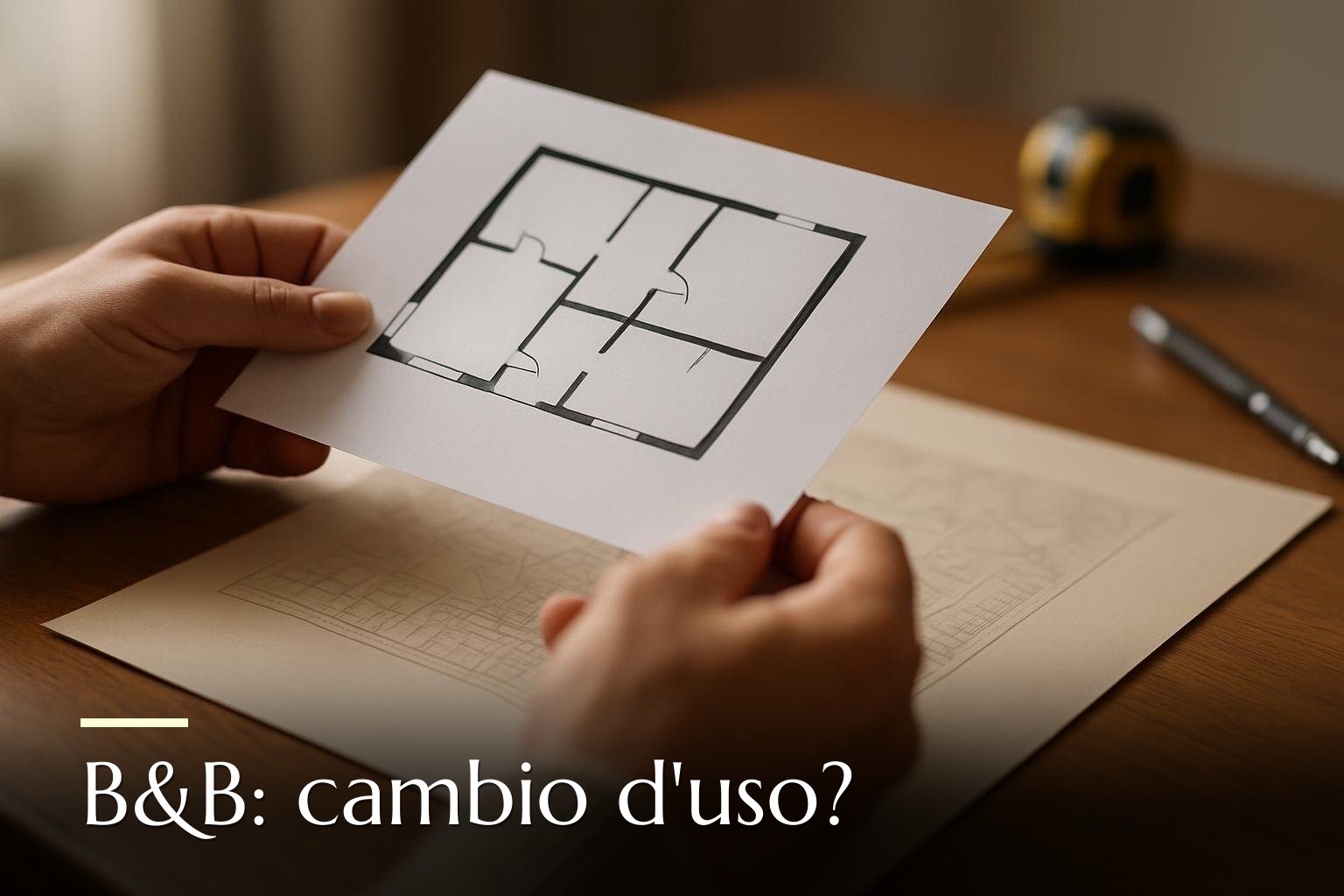
Many owners considering converting an apartment into a Bed & Breakfast wonder whether it is necessary to change the use to B&B. The answer is not automatic: it depends on the legal classification of the activity, the presence of building works and regional or municipal regulations. In this guide we cover the main criteria, potential charges and the fiscal and condominium consequences, with some practical references for those operating in Turin and nearby areas.
When change of use is not required
If the activity is a family-run non-commercial B&B, where the owner permanently resides in the property and reserves part of the home for temporary hosting, the unit retains residential status. According to article 23-ter of D.P.R. 380/2001 and the most common legal interpretation, occasional hospitality does not change the primary function of the residence. In this case it is not necessary to change the cadastral category or request a specific building permit, unless works changing the nature of the unit are undertaken.
When the change of use becomes mandatory
The procedure is required when the activity takes on a professional or commercial nature: continuous opening, employment of external staff, increase in the number of rooms beyond local limits, or absence of the manager's residence. In these cases, regional regulations and the municipal master plan may reclassify the facility as tourist accommodation or commercial property, making a formal change of use and urban planning compliance necessary.
Building works and administrative process
According to the Consolidated Building Act (D.P.R. 380/2001) and the simplifications introduced by Law 105/2024 ("Salva Casa" decree), it is essential to distinguish between changes of use with or without building works. If the change is purely documental and involves no significant building interventions, often a SCIA notification to the One-Stop Building Office is sufficient. However, if the work includes major extraordinary maintenance, subdivisions, volume increases or other structural changes, a Building Permit is required and urbanisation fees may apply.
From C6 (garage) to residential: critical issues
Converting a garage (category C6) into a micro-apartment for hosting involves specific constraints. Minimum hygienic and health standards for habitability must be guaranteed and compliance with parking obligations set by the master plan and regulations (e.g. Law 122/1989) verified. Often the municipal plan prohibits the removal of designated parking spaces, and basement spaces may not meet habitability standards, potentially leading to rejection of planning applications.
Costs to consider
Costs vary greatly depending on the municipality and complexity of works. Consider technical fees (reports, site supervision, certifications), building and urbanisation charges if applicable, professional fees, any necessary technical or structural upgrades, and the cost of the SCIA or Building Permit. It is advisable to request detailed quotes from technicians and the municipal planning office before proceeding.
Impact on tax incentives
The renovation tax deduction (article 16-bis of D.P.R. 917/1986) applies to interventions on residential units of group A. If, after works, the unit is converted into tourist accommodation, case law and Revenue Agency guidelines warn of the risk of losing entitlement to deductions. A recent judgement by the Veneto Tax Commission (ruling no. 431/2026) confirmed that conversion into a tourist facility can cause forfeiture of previously claimed deductions, requiring repayment. It is therefore crucial to plan tax matters alongside building works.
Relations with the condominium
Opening a B&B in a condominium may cause conflicts, but the assembly cannot prohibit the activity unless the condominium contract rules – unanimously approved – explicitly ban it. Supreme Court jurisprudence holds that prohibitions introduced by ordinary majorities cannot be enforced against an individual owner conducting lawful activities consistent with the property’s use.
Practical advice for those operating in Turin
- Immediately check the municipal PRGC and regional regulations for hospitality: some local rules may set limits on the number of rooms and residency requirements. For those operating in Turin, it is useful to review the updates to the municipal master plan and assess the allocation of accommodation functions in the neighbourhood.
- Involve a qualified professional in the early stages to determine whether the intervention falls under free building works, CILA, SCIA, or Building Permit.
- Calculate the economic balance including possible tax relief and the risk of loss of deductions in case of a final change of use.
- If the property is in a condominium, reread the regulations and discuss any issues in advance at the assembly.
To explore the specific urban planning impact of the transformation in Turin, it may also be useful to consult our article on change of use with the new PRGC of Turin, which analyses the local updates.
In summary: not all B&Bs require a change of use; the need depends on the type of activity, the owner's residence, planned works, and municipal rules. Before starting works or organised activity, verify regulations, costs, and fiscal and condominium risks with a trusted professional. If you want practical and personalised advice for a property in Turin or its province, contact us for a consultation.
Do you have questions about this topic or your property?
Talk to us