Unique condominium redevelopment programmes: opportunities for owners in Turin
by Marco Balistreri · · 5 minute read
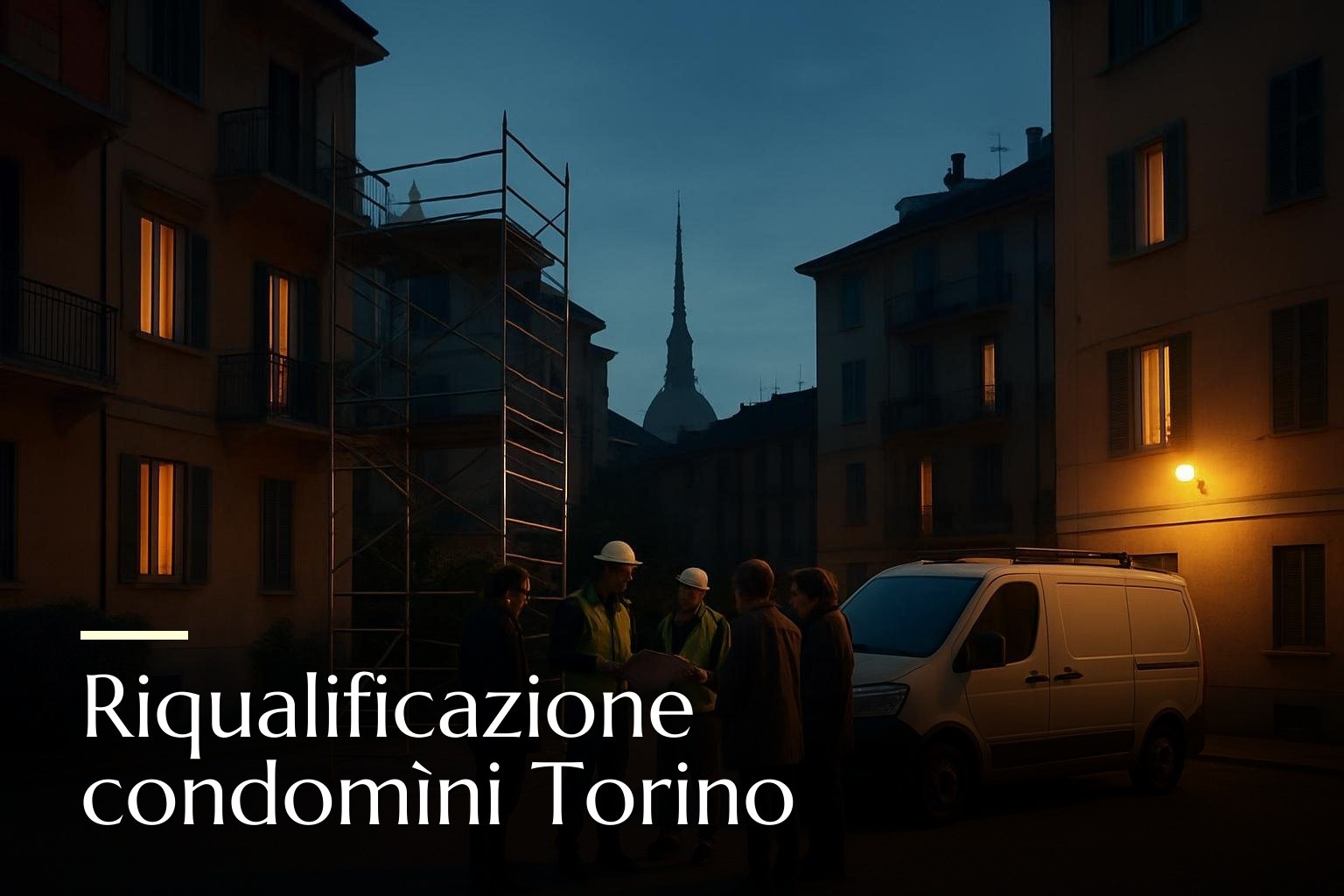
In Turin, the energy and structural redevelopment of condominiums is now a priority to reduce consumption, improve comfort and increase property value. Unique condominium redevelopment programmes aggregate multiple buildings into a single design and contract: this approach can lower unit costs, attract financing and reduce construction times compared to isolated interventions.
In brief
- These programmes group several condominiums into a single work plan to achieve economies of scale and uniform offers.
- They allow easier access to financing tools and EPC contracts linking payments to energy savings.
- In Turin, municipalities and one-stop shops can support aggregation by providing data, calls for tenders and technical-administrative coordination.
- Before joining, evaluate cost estimates, timelines, savings profiles and contractual clauses; a transparent process in the assembly is necessary.
What is a unique redevelopment programme and why it is beneficial
A unique redevelopment programme groups several condominiums — often in the same neighbourhood or urban area — into an integrated single project. In Turin, this approach is advantageous because it allows tailored offers from companies, reduces unit prices for materials and labour, and speeds up times through coordinated site planning. Furthermore, aggregated projects are more attractive to banks and investors, who can assess risks and returns on a larger scale.
Who coordinates the process in Turin: the role of the Municipality and help desks
At national success cases, the Municipality plays a central role: providing urban and energy data, setting up information points and facilitating preliminary agreements between private parties and operators. In Turin, the competent municipal offices and building help desks can serve as an information hub for interested groups of condominiums, assisting in collecting technical documents, guiding authorisations and signalling incentives available nationally or regionally.
Concrete advantages for owners
- Reduced unit costs: centralised purchases of materials and site organisation at scale enhance economic negotiations.
- Access to finance: aggregated programmes are more robust for banks and financial operators, facilitating favourable loans or leasing structures.
- Reduced times: coordinated sites decrease overall intervention duration and interference with condominium life.
- Higher technical quality: contracts across multiple buildings encourage the use of structured companies and certifications (e.g., ESCo, EPC contracts) that guarantee measurable savings.
Risks and points to check before deciding
Not all condominiums benefit equally. Before joining a unique programme, clear numbers are essential: cost estimates, required interventions, expected energy savings and timelines. The assembly requires transparency on penalties, responsibilities in case of delays and payment methods. Be cautious with EPC contracts: useful for transferring technological risks but must be studied to understand how actual savings are calculated and what guarantees the operator provides.
How to form a group of condominiums in Turin: practical steps
1) Start the discussion in the assembly: present the idea and gather preliminary adhesions. 2) Request an energy diagnosis and a preliminary study (also collective) to quantify interventions and benefits. 3) Involve the Municipality or building help desk to verify local opportunities and calls for tenders. 4) Invite multiple companies to present aggregated offers and evaluate proposals with comparable criteria. 5) Prepare a shared adoption regulation among involved condominiums defining costs, times and allocations.
Useful incentives and financial tools
In Italy, the main levers for redevelopment are tax bonuses and energy performance contracts (EPC), as well as dedicated banking financing forms. In Turin, it is useful to verify both national incentives and any regional or municipal measures for redevelopment. Aggregation facilitates access to structured financing and contracts where the operator’s remuneration is linked to actual savings, reducing the direct burden on individual owners.
A practical example of an aggregated intervention in the city
Let's imagine three apartment blocks in a residential district of Turin: replacement of heating systems with centralized heat pumps, insulation of facades, and high-performance windows. With a single project, companies offer better prices for materials and installation, the savings estimate is consolidated, and an ESCo can propose an EPC contract linking part of the compensation to the measured savings. The worksites are scheduled in rotation to reduce disruption and optimise mobilisation costs.
How to evaluate an offer: quick checklist
- Compare energy savings estimates and payback periods.
- Check technical guarantees and the duration of included maintenance.
- Clarify cost allocation among apartment blocks and financing methods.
- Check clauses on delays, penalties and company liabilities.
Frequently asked questions
What is the difference between individual and collective renovation?
Collective renovation combines multiple apartment blocks under a single project: this ensures economies of scale, better contractual conditions and greater appeal for financiers compared to individual interventions, which can be slower and more expensive per unit.
Is the approval of every condominium meeting required?
Yes: each involved apartment block must resolve according to the ordinary or extraordinary rules established by the Civil Code for the planned interventions. A participatory process is essential to avoid later disputes.
Are EPC contracts safe for owners?
EPC contracts transfer part of the technical risk to the operator and link compensation to measured savings; they are effective if measurement terms and guarantees are clear. Having them verified by an independent technician is a good practice.
What is the role of the Municipality in these programmes in Turin?
The Municipality can facilitate aggregation by providing data, information desks, support for calls and administrative procedures, and guidance on local and national incentives. Institutional involvement increases owners' and investors' confidence.
If you live in or own an apartment in Turin and are considering your building's renovation, it's wise to start with a clear diagnosis and open discussion among neighbours. For advice on potential savings, contract options or which incentives may apply to your case, you can contact us: we evaluate feasibility and operational steps together with no obligation.
Do you have questions about this topic or your property?
Talk to us