The office market in Turin: impacts for investments and leases
by Marco Balistreri · · 5 minute read
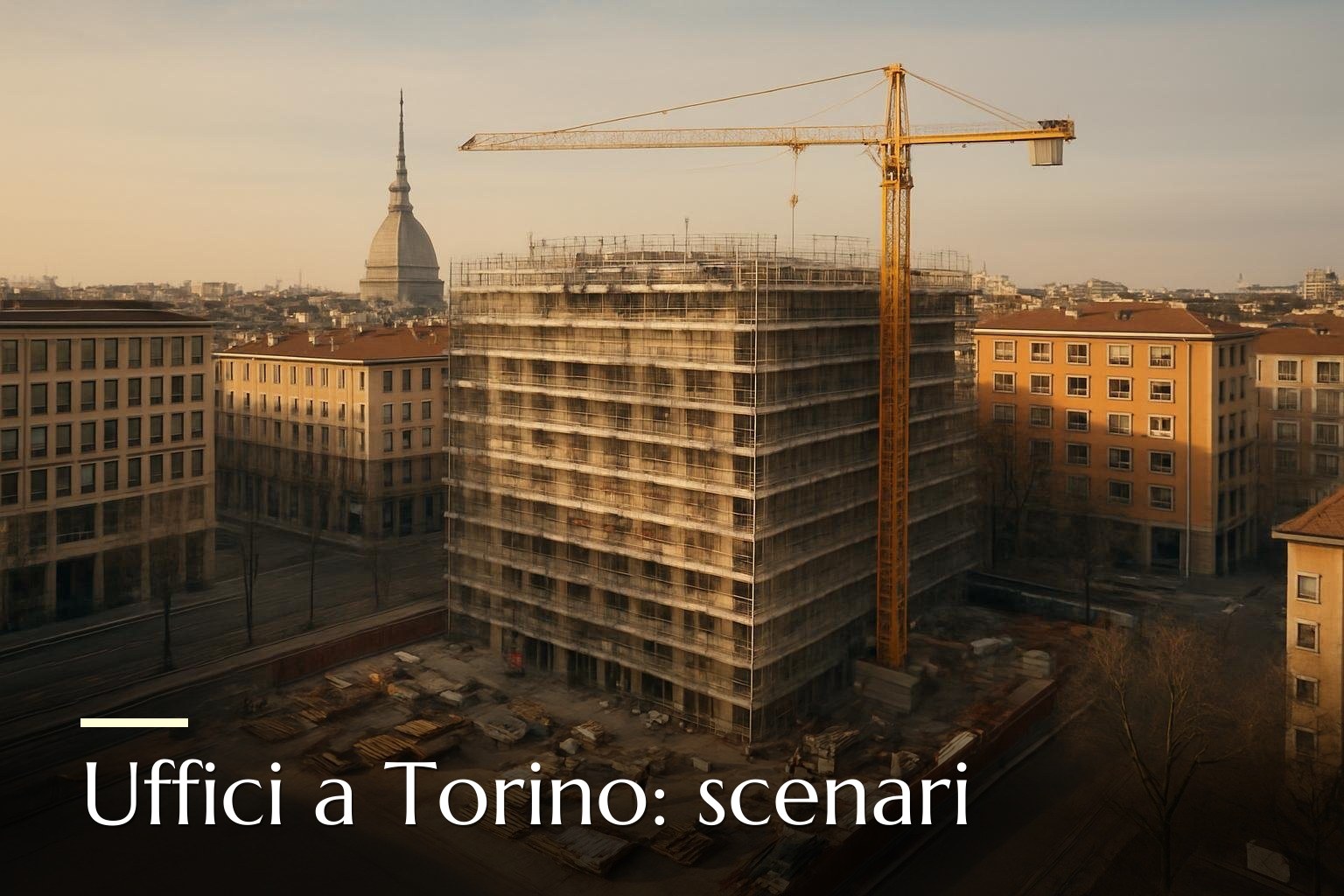
Turin's office market is closely linked to European dynamics: growing polarisation towards high-quality assets and pressure on yields directly affect rents, leasing demand and investment decisions in our city. In this article I explain how to interpret international signals and which practical actions to consider if you own, seek or wish to convert professional spaces in Turin.
In brief
- Demand is concentrated on prime offices; in Turin this means greater interest in modern buildings in the CBD and well-connected transport areas.
- The average European vacancy rate is around 9-10%; locally, rates vary significantly between central and peripheral areas.
- Yields and prices are more volatile: caution in investments but opportunities for those targeting quality or redevelopment.
- For owners in Turin, renovation and energy certification increase competitiveness in the Turin office market.
Why European polarisation matters in Turin
In Turin, major European trends result in two main effects: concentration of demand on quality products and pressure on secondary assets. Local companies and professional firms prefer modern spaces, well connected and with energy certifications, while obsolete buildings in the suburbs remain more difficult to rent.
How rents and vacancy rates are changing in the city
Prime rents in major European cities have risen in the last 12 months; in Turin, this is mainly reflected in central areas and business hubs with better accessibility (e.g. around Porta Nuova, Lingotto and some parts of corso Vittorio). Conversely, less served areas see rising vacancy and pressure on rental prices.
Investments: opportunities and risks for office buyers in Turin
Institutional investors tend to favour prime assets and large-scale transactions. In Turin, this translates into greater interest in redeveloped or renovated buildings offering flexible space, service areas (meeting rooms, reception, spaces for hybrid work) and low operating costs. The greatest risk concerns offices not meeting modern standards: they may require significant upgrading investments to maintain or increase value.
Space conversion: when it pays to convert an office
Conversion to residential, co-working or mixed-use is a concrete way to reduce risk linked to secondary properties. In Turin, feasibility depends on urban planning constraints, expected profitability and costs of works (including energy efficiency interventions). Before deciding, it is advisable to carry out technical and economic due diligence to assess payback times and available incentives.
Financial aspects: returns and credit access
In a context of higher interest rates, yields required by investors tend to rise; this impacts purchase prices. In Turin, buyers today must consider slower revenue scenarios and possible adaptation costs. For those seeking financing, it is important to prepare realistic business plans and evaluate offers from different institutions, as well as check potential tenants' solvency to obtain better conditions.
Practical advice for owners and tenants in Turin
- Consider targeted refurbishment interventions: energy efficiency, modern HVAC systems and flexible spaces increase attractiveness.
- Segment the offer: marketing renovated portions separately from non-upgraded assets can reduce vacancy periods.
- Verify compliance and planning documentation before selling or converting: a building regularity report is often crucial.
- Consider short-lease formulas or smart working spaces to attract SMEs and growing startups.
Impact on short-term rental demand and professionals
Piedmont companies increasingly evaluate the mix between fixed office and hybrid work. For owners, this means offering flexible contracts, well-equipped common areas and services that improve quality of the workday. Professional firms in the city centre continue to seek representative spaces, while less location-sensitive activities can move to the periphery if accessibility is guaranteed.
Links with local initiatives and infrastructure
New infrastructure investments in Turin influence office values: areas with improved rail links or urban regeneration projects become more attractive to investors and occupiers. For more on how infrastructure changes the local market, see also New infrastructure investments: opportunities for the real estate market in TurinMoreover, adopting technologies for efficiency and AI applied to buildings is a factor that can differentiate a property: for practical advice read AI and building electrification: opportunities for owners in Turin.
Frequently asked questions
Is it worthwhile to invest in offices in Turin today?
It depends on the asset: quality and well-located properties can offer attractive returns, while obsolete offices require significant upgrading investments. Evaluate costs, local demand and possible conversion scenarios before deciding.
How can I reduce vacancy of an office in the suburbs?
The most effective actions are improving energy efficiency, offering contract flexibility, upgrading systems and promoting additional services (shared workstations, meeting rooms). Also, a targeted marketing plan aimed at startups and SMEs can increase leasing chances.
Which areas of Turin are most sought after for offices today?
Central areas and hubs with good connections (around Porta Nuova, Lingotto and some parts of corso Vittorio) remain among the most requested. Regenerating neighbourhoods can also attract demand if equipped with infrastructure and services.
When is it worthwhile to convert an office into residential?
It is worthwhile if the adaptation costs, urban planning restrictions, and the local real estate market make the operation more profitable than leasing as office space. A technical-economic due diligence and verification of incentives and local regulations are essential.
Final practical advice: if you own an office in Turin, ask yourself which type of occupier you want to attract and plan targeted interventions (energy efficiency, flexible layout, services). If you need space, consider both prime products and opportunities for spaces redesigned for hybrid work. For a specific evaluation of your property or to understand conversion opportunities in Turin, contact us for a personalised technical and commercial opinion.
Do you have questions about this topic or your property?
Talk to us