Renting a room: tax and contractual rules to know
by Marco Balistreri · · updated on · 6 minute read
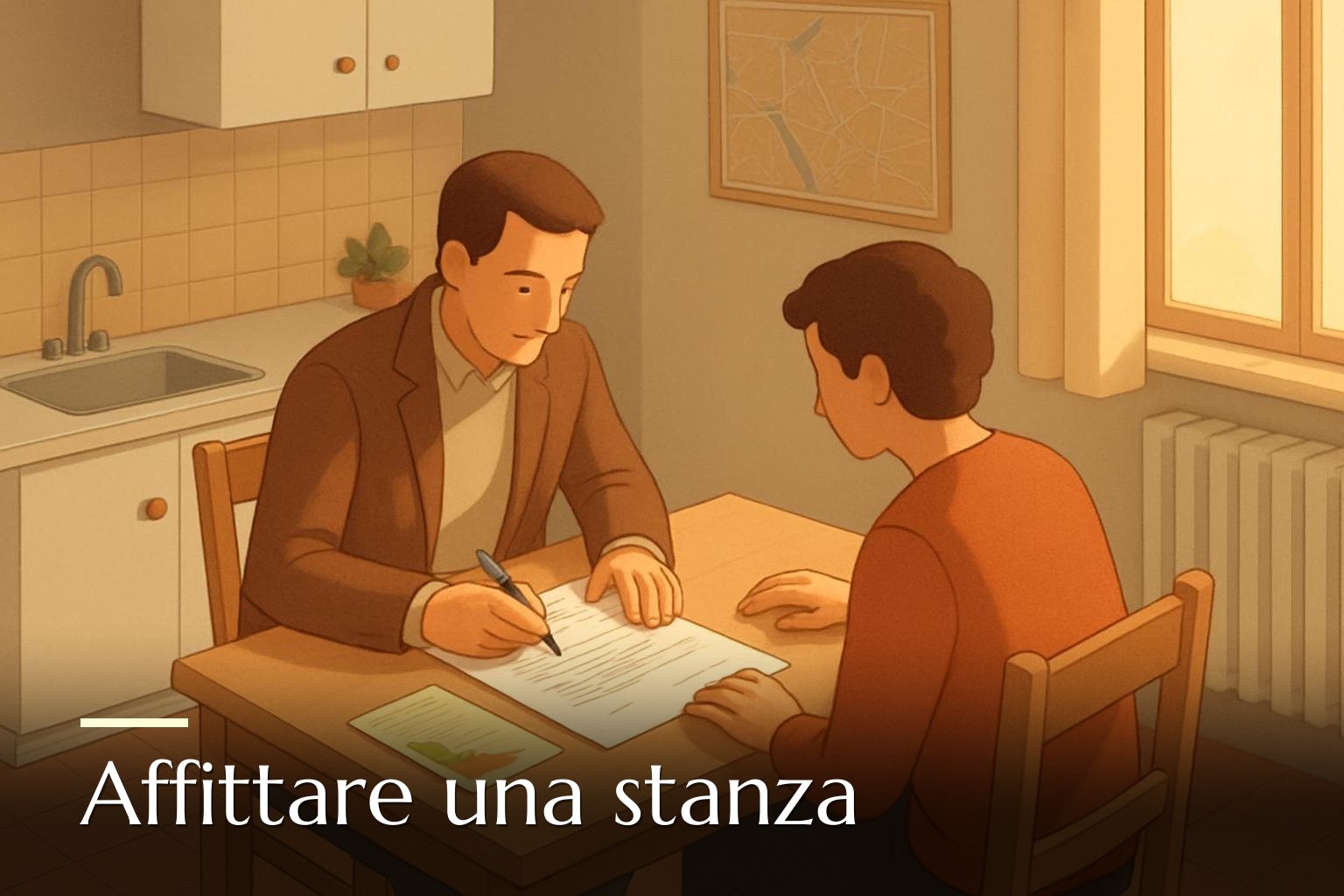
Renting a room can be an attractive solution for many owners in Turin aiming to increase property yield or share expenses. However, renting a room entails specific fiscal and contractual obligations: choice of tax regime, contract registration procedures, rights and duties of parties and administrative compliance. This practical guide explains step-by-step what to know to avoid errors and penalties.
In brief
- Registration: any lease contract exceeding 30 days in total must be registered with the Revenue Agency.
- Tax regime: it is possible to opt for the flat-rate tax (fixed rate) or ordinary taxation (IRPEF), choice to be evaluated on a case-by-case basis.
- Contract: choose between a contract for shared residential use (portion of a house) or a contract for a single room; specify shared rights and expenses.
- Communications: obligation to report tenant data to the competent authorities and to issue receipts for rents received.
What renting a room means: contract types
In Turin, as in the rest of Italy, those who decide to rent a room can do so through various arrangements: authorised subletting, single-room lease (partial contract) or cohabitation contracts written ad hoc. The choice affects who signs the contract, who pays the utilities and how the condominium fees are divided. If the owner rents out a single room within their property, they sign the contract directly with the individual tenant; if the main tenant sublets, written authorization from the owner is required.
Registration rules: when and how to register the contract
Contract registration with the Revenue Agency is mandatory when the total duration exceeds 30 days in the calendar year. Even for single-room contracts, the agreement must be registered indicating the property’s cadastral data, the parties’ details and the agreed rent. Registration can be done online or through an authorised intermediary; failure to register exposes to penalties and increased tax obligations.
Flat tax or IRPEF: how to choose the tax regime
Those renting a room must decide the tax regime to apply to the rents. The flat-rate tax is an optional regime that applies a fixed rate on the rent (if applicable to the contract type) and exempts from registration and stamp duties. Ordinary taxation includes rents in real estate income taxed under IRPEF rates, with deductions and allowances possible. For room contracts in private homes, the flat-rate tax is often advantageous if simplicity and predictability are sought, but it is always advisable to simulate the numbers considering the owner’s total income and deductible expenses.
Rent, receipts and payment traceability
In Turin, it is good practice to receive rent via bank transfer or other traceable means, specifying the period and property address in the payment reference. If choosing the flat-rate tax, the owner does not need to issue receipts subject to stamp duty, but it is advisable to issue a simple receipt or payment summary for transparency. In case of dispute, traceable receipts are proof of payments made.
Utilities, condominium fees and cost sharing
The contract governing the room rental must clearly state who pays for utilities (gas, electricity, water, internet) and how condominium fees are shared. In Turin, in historic buildings with centralised systems, it is important to specify consumption reading and reimbursement methods. To avoid disputes, define fixed shares or divisions based on actual consumption in writing and keep bills and receipts.
Rights and duties: safety, habitability and coexistence rules
The owner is responsible for delivering the room in habitable condition, with compliant and certified systems where required. The tenant must use the property properly and respect cohabitation rules stated in the contract (hours, use of common areas, prohibition of unauthorised subletting). For rooms rented to students or temporary workers, attaching an internal regulation specifying kitchen use, cleaning, waste management and respect of common spaces is useful.
Practical tax aspects and annual obligations
From a tax perspective, rents received must be declared in the income tax return; if opting for the flat-rate tax, the taxation is separate and simplified, but the choice must be communicated to the Revenue Agency. In case of co-ownership (bare ownership/usufruct or joint ownership), the income share for each must be established. Keeping simple accounts of income and expenses and retaining documents for at least 5 years is good practice for potential audits.
When municipal authorisation or change of use is required
Usually, renting a room in a residential apartment does not require change of use, but if the use takes on hospitality characteristics (frequent short-term rentals, B&B, hospitality activity) municipal authorisations and special registrations may be required. In Turin, it is important to check if frequent short-term rentals are planned: see the guide on affitti brevi local limits and obligations.
Practical advice for owners in Turin
- Draft a written contract specifying rent, expenses, utilities and cohabitation rules.
- Prefer traceable payments and keep fiscal documentation.
- Assess the convenience of the flat-rate tax with personal tax simulation.
- Check the energy performance certificate (APE) and the safety of installations before handing over the room.
- If the goal is to maximise return, also read our guide on how much a rental property yields today.
Also read
Frequently asked questions
Do I always have to register the contract when renting only one room?
Yes: if the total duration exceeds 30 days within the calendar year, the lease contract must be registered with the Revenue Agency. Even single-room contracts are subject to registration to comply with tax obligations.
Can I apply the flat tax if I rent out only one room?
Yes, in many cases the flat tax is also applicable for renting a single room within the main residence; it is advisable to assess the impact compared to the IRPEF based on total income and any deductions.
Who pays the utilities if not specified in the contract?
If the contract does not specify anything, paying utilities can lead to disputes. It is always better to clearly state whether utilities are included in the rent or divided according to bills or fixed shares.
Is a municipal authorization required to rent rooms to students or temporary workers?
Generally no for rentals of single rooms in private homes; however, if the activity becomes hospitality in nature or repeated short-term rentals occur, a notification or authorization from the Municipality may be required. Check local regulations in Turin.
In summary, renting a room is a flexible solution but requires attention to contract registration, tax choices, and contractual clarity to avoid misunderstandings. For advice on a specific case in Turin or to review documentation, feel free to contact us: we can help you evaluate the most suitable tax option and draft a secure contract.
Do you have questions about this topic or your property?
Talk to us